
Table of Contents
ToggleProteins
Starting from eating raw eggs in the movie “Rocky” and ending with protein shakes on every counter in gyms all across the world, Proteins have become not just a nutrient, but a Fitness phenomenon.
Want to lose weight? Take a protein shake!
Want to gain weight? Take a weight gainer protein shake!
Want every girl in the gym to like you? Take a testosterone filled protein shake!
A shake of Protein for every occasion, every person, their children, and even their dog!…
And I see you already grinning right through the screen, gleefully expecting a twist. Yes, there is a BIG marketing and sales component to this. But no worry, I will clean the gold nugget from the mud of propaganda and present it to you.
Here we go.
What Are Proteins?
Think of proteins as tiny building blocks that make everything in your body tick. They’re in every cell, helping your muscles flex, your food digest, and even your immune system fight off germs.
Proteins are made of smaller pieces called amino acids, which are like Lego bricks that snap together to form chains. These chains twist and fold into unique shapes to do specific jobs in your body.
Your body uses 20 different amino acids, and 9 of them are “essential,” meaning you have to get them from food because your body can’t make them. Foods like eggs, chicken, beans, or nuts are packed with these amino acids, which your body breaks down and rebuilds into proteins to keep you going.
Why do we need proteins?
Proteins are like the construction crew for your body. Here’s what they do to keep you in top shape:
- Build and Repair Muscles: After a tough workout, proteins help repair and grow your muscles, making you stronger over time.
- Boost Energy: Proteins can act as a backup energy source when you’re pushing hard during exercise.
- Support Immunity: Proteins like antibodies fight off bacteria and viruses, keeping you healthy for your next gym session.
- Carry Stuff Around: Proteins like hemoglobin deliver oxygen to your muscles, helping you power through cardio or weights.
- Speed Up Reactions: Enzymes, which are proteins, make processes like digestion happen faster so you can use the nutrients from your meals.
- Keep You Moving: Proteins help your muscles contract and move food through your digestive system, so you’re always ready to go.
Whether you’re lifting weights or running a 5K, proteins are your body’s MVPs.
Where to Get Your Protein
You don’t need to be a chef to get enough protein. It’s in tons of foods you probably already eat:
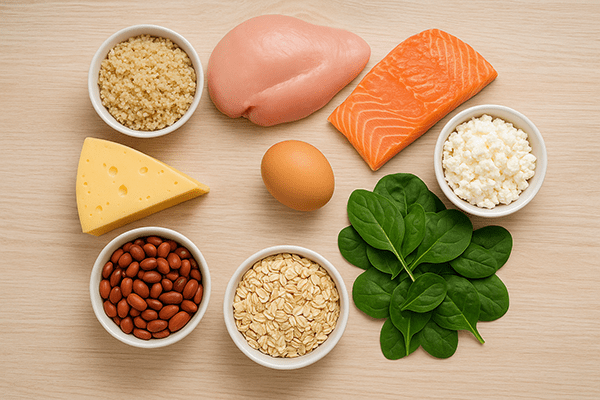
- Animal-Based: Chicken, fish, eggs, beef, and dairy (like Greek yogurt or cheese) are protein powerhouses. They’re great for getting all those essential amino acids.
- Plant-Based: Beans, lentils, chickpeas, nuts, seeds, and whole grains like quinoa or oats are awesome choices, especially if you’re vegetarian or vegan.
- Surprising Sources: In some parts of the world, insects like crickets are a protein-packed snack—up to 50% of dietary protein in some African diets comes from bugs!

As disgusting as it sounds, its true. Which is why I mention it. And no, I don’t force you to eat bugs. Don’t worry. Lets keep moving.
Protein powders (like whey or soy) can be handy for post-workout shakes, but if you’re eating a balanced Diet, you probably don’t need them. Most people get plenty of protein from food alone.
Truth be told, I used protein shakes for many years, because I thought, just like the majority, that they are necessary. About 5 years ago I stopped. How and why?
I was very busy working on my job and I simply forgot to buy them time and time again. Despite the stress from work and strength training, I had a balanced diet rich in Carbs and Protein.
But here is the kicker. Nothing changed. My energy levels, my Strength, efficiency, and so on, didn’t change whatsoever. Quite the shock, isn’t it?
How much protein do you really need?
The average person needs about 0.8 grams of protein per kilogram of body weight daily. For a 150-pound person (68 kg), that’s roughly 55 grams—think two chicken breasts or a couple of cups of lentils. But if you’re active, you might need more:
- Endurance Athletes: Runners or cyclists may need 1.2–1.4 grams per kg to repair muscles and replace protein used for energy during long workouts.
- Strength Trainers: Weightlifters might aim for 1.4–2.0 grams per kg to build muscle and recover from intense sessions.
In the U.S., most people eat more protein than they need—women average about 70 grams a day, and men hit around 98 grams. So, you’re probably already covered unless you’re cutting calories or training super hard.
What are the 9 essential amino acids and their functions
One thing I need you to understand, my dear Reader, is the fact that your body needs these nine amino acids because it can’t produce them, unlike the other 11 amino acids it can make. They’re the building blocks for proteins that do everything from building muscle to fighting germs. For fitness, they’re especially important because:
- Muscle Growth and Recovery: Leucine, isoleucine, and valine (BCAAs) are key for repairing and building muscle after workouts.
- Energy and Endurance: Amino acids like isoleucine and valine can be used for energy when carbs are low, helping you power through exercise.
- Overall Health: They support immunity, joint health, and mental focus, all of which keep you training consistently.
Hence, why I need you to see their names, know what they do and where you can find them. This is essential information, especially when creating a meal plan for your needs. So, pay close attention:
-
- Histidine
- What It Does: Helps make histamine, which supports immune responses and digestion. It’s also important for growth and tissue repair.
- Fitness Benefit: Supports muscle repair after workouts and helps your body fight inflammation from exercise stress.
- Food Sources: Chicken, fish, eggs, soybeans, quinoa.
- Isoleucine
- What It Does: A branched-chain amino acid (BCAA) that helps with muscle repair, energy production, and blood sugar regulation.
- Fitness Benefit: Boosts muscle recovery and provides energy during workouts, making it a favorite for athletes.
- Food Sources: Eggs, turkey, lentils, almonds, beef.
- Leucine
- What It Does: Another BCAA, leucine is a superstar for triggering muscle protein synthesis (building muscle).
- Fitness Benefit: Key for muscle growth and repair, especially after strength training. It’s why protein shakes often highlight leucine.
- Food Sources: Chicken, soybeans, tuna, pumpkin seeds, cottage cheese.
- Lysine
- What It Does: Supports tissue repair, hormone production, and collagen formation for healthy skin and joints.
- Fitness Benefit: Helps repair muscles and connective tissues, keeping joints strong for heavy lifting or running.
- Food Sources: Fish, pork, eggs, tofu, chickpeas.
- Methionine
- What It Does: Contains sulfur, which helps build proteins and supports detoxification and metabolism.
- Fitness Benefit: Aids in muscle recovery and supports energy production by helping metabolize fats and carbs.
- Food Sources: Brazil nuts, fish, beef, sesame seeds, oats.
- Phenylalanine
- What It Does: Used to make neurotransmitters like dopamine and norepinephrine, which affect mood and energy.
- Fitness Benefit: Supports mental focus during workouts and recovery by aiding brain function.
- Food Sources: Dairy, eggs, soybeans, chicken, lentils.
- Note: People with phenylketonuria (PKU) must limit phenylalanine to avoid health issues.
- Threonine
- What It Does: Helps form collagen and elastin for skin and connective tissues and supports immune function.
- Fitness Benefit: Keeps tendons and ligaments strong, reducing injury risk during exercise.
- Food Sources: Turkey, pork, soybeans, chickpeas, lentils.
- Tryptophan
- What It Does: Used to make serotonin, which regulates mood, sleep, and appetite.
- Fitness Benefit: Supports better sleep for recovery and keeps you mentally balanced for consistent training.
- Food Sources: Turkey, chicken, oats, cheese, pumpkin seeds.
- Valine
- What It Does: A BCAA that supports muscle growth, repair, and energy production.
- Fitness Benefit: Helps with muscle recovery and endurance, keeping you strong during long workouts.
- Food Sources: Beef, peanuts, soybeans, mushrooms, quinoa.
- Histidine
Getting Them in Your Diet
- Animal Sources: Meat, fish, eggs, and dairy (like yogurt or cheese) are “complete proteins,” meaning they contain all nine essential amino acids in good amounts.
- Plant Sources: Soybeans, quinoa, and buckwheat are complete proteins. Other plants like beans, lentils, nuts, and grains have some but not all nine, so combine them (e.g., rice and beans) to get the full set.
Protein and Diet
Here’s how to make protein work for your fitness goals:
-
Spread It Out: Eat protein with every meal to keep your muscles fueled all day. Think eggs for breakfast, a turkey wrap for lunch, and salmon with quinoa for dinner.
-
Mix It Up: Combine animal and plant sources to get a variety of nutrients. A bean salad with a side of yogurt is a great combo.
-
Post-Workout Boost: A protein-rich snack like a shake or a handful of nuts within an hour after exercise can help your muscles recover faster.
-
Don’t Overdo It: Too much protein won’t make you bulk up faster and might strain your kidneys or lead to calcium loss over time. Stick to what your body needs.
If you’re trying to lose weight, a slightly higher protein diet (1.8–2.0 g/kg) can help you feel full and preserve muscle. Not only that, but the body also has the ability to turn Proteins into an energy source through following ways:
-
Breaking Down Proteins into Amino Acids
- Proteins from foods (like chicken, eggs, or beans) are broken down in your stomach and intestines into smaller pieces called amino acids.
- These amino acids are absorbed into your bloodstream and sent to your cells for various jobs, like building muscles or acting as enzymes.
-
Using Amino Acids for Energy
- If you’re low on carbs (or fats), your body can burn amino acids for energy. This happens in your cells, where amino acids are broken down to release energy, providing 4 calories per gram (same as carbs).
- This process isn’t the body’s first choice because it prefers to save proteins for building and repairing tissues, but it’s a backup when energy is needed fast, like during a long workout or if you skip meals.
-
Turning Amino Acids into Glucose (Gluconeogenesis)
- Your body can also convert certain amino acids into glucose, a simple sugar that’s a carbohydrate. This process, called Gluconeogenesis (meaning “making new glucose”), happens mainly in your liver and sometimes kidneys.
How it works:
- Specific amino acids (like alanine, glutamine, or aspartic acid) are “glucogenic,” meaning they can be reshaped into glucose through chemical reactions.
- Your liver strips off the nitrogen from these amino acids (turning it into ammonia, then urea, which you pee out) and uses the remaining carbon skeleton to build glucose.
Why it happens
Glucose is critical for your brain, red blood cells, and muscles during exercise. If you’re not eating enough carbs or your glycogen stores (carb reserves in muscles and liver) are low, your body makes glucose from proteins to keep these systems running.
Example: During a long run or if you’re on a keto diet, your body might break down muscle proteins or dietary proteins to make glucose for energy.
All these steps above are crucial to know when creating a dieting plan to reduce fat deposits and keeping muscle cells intact.
Protein traps
Proteins are awesome, but things can go wrong:
-
Not Enough Protein: Skimping on protein can lead to muscle loss, fatigue, or even serious conditions like kwashiorkor, which causes swelling and growth issues. This is rare in developed countries but a big problem globally.
-
Allergies: Some people are allergic to proteins in foods like eggs, milk, or soy, which can cause anything from a rash to serious reactions. If you suspect an allergy, talk to a doctor.
-
Health Conditions: If you have kidney disease, too much protein can be hard on your kidneys, so a lower intake (0.6–0.8 g/kg) might be better.
Making Sense of Protein Quality
Not all proteins are created equal. The quality depends on how well your body can use the amino acids. Animal proteins (like eggs or fish) are usually “complete,” meaning they have all nine essential amino acids. Plant proteins might lack one or two, but combining them (like rice and beans) covers all your bases. Scientists use scores like PDCAAS (Protein Digestibility Corrected Amino Acid Score) to rate protein quality, but for most people, eating a variety of foods does the trick.
The Bottom Line
Proteins are your body’s best friend for staying strong, recovering from workouts, and keeping your energy up. By eating a mix of protein-rich foods and matching your intake to your activity level, you can support your daily activities such as job obligations and hobbies like sports.
That’s it for this article about Protein. I hope you learned a lot and don’t forget to subscribe to my newsletter. Tons of goodies coming your way!
See you in the next article.
PEACE!
Sources:
https://www.britannica.com/science/protein
https://my.clevelandclinic.org/health/body/proteins
https://www.betterhealth.vic.gov.au/health/healthyliving/protein
https://medlineplus.gov/genetics/understanding/howgeneswork/protein/